


Mesa Gateway Airport is entering another major stage of growth, with hundreds of acres still available for development and several large projects transforming the area around the airport.
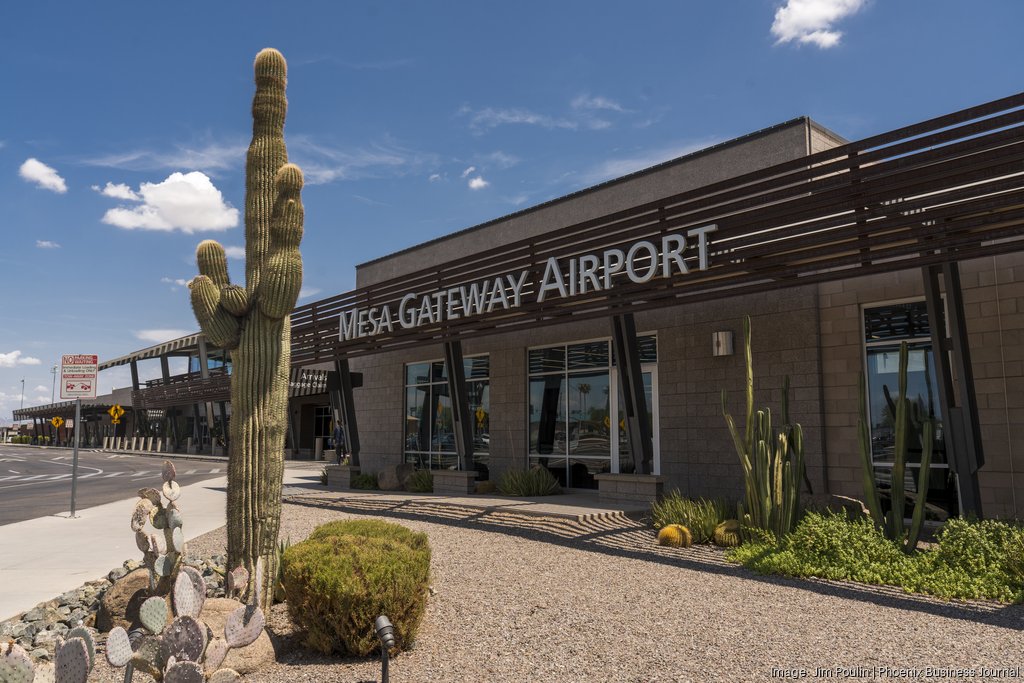
The 3,000-acre property has undergone several transformations since it was first established as Williams Field during World War II. After decades as Williams Air Force Base, it became a public airport and was renamed Mesa Gateway Airport in 2024.
Today, the airport is growing both as a passenger facility and as an economic development hub. During fiscal year 2026, Mesa Gateway Airport welcomed more than 2 million passengers and recorded new highs for operating revenue, net income, aviation fuel sales and parking revenue.
The Phoenix Business Journal recently reported that approximately 600 acres remain available for development, with much of that land connected to two major projects: Gateway East and SkyBridge Arizona.
Gateway East Adds Business and Commercial Development
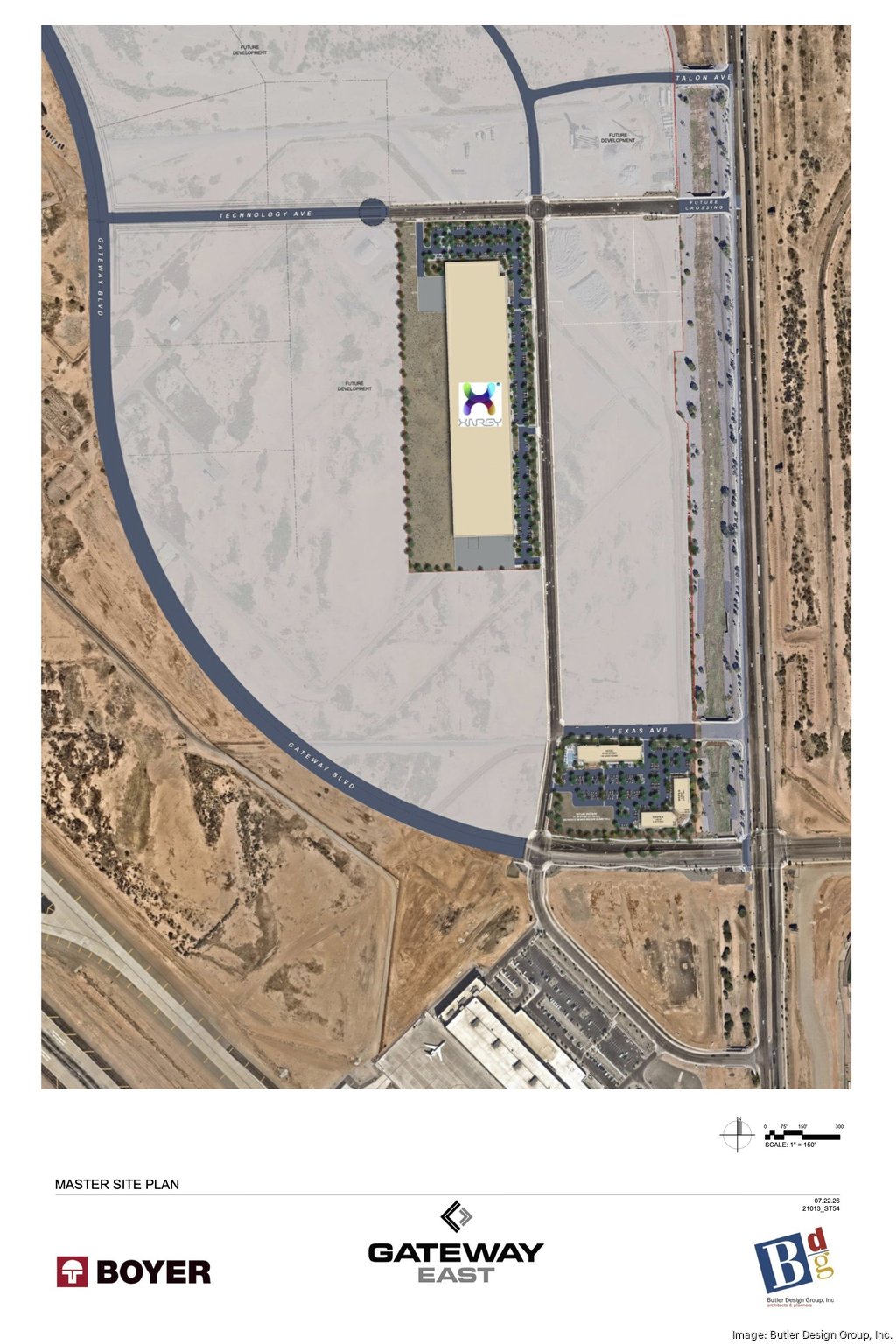
Gateway East is a roughly 273-acre master-planned business park on the northeast side of the airport near Ellsworth Road and State Route 24.
Developed by The Boyer Company, the project is planned for industrial, office, hotel, restaurant, medical and retail uses, with the potential for millions of square feet of development.
One of its largest tenants is XNRGY Climate Systems, which opened its U.S. headquarters at Gateway East in a 275,000-square-foot facility. A 125-room SpringHill Suites hotel and approximately 17,000 square feet of restaurant and retail space are also under construction.
SkyBridge Expands the Airport’s Aviation Base
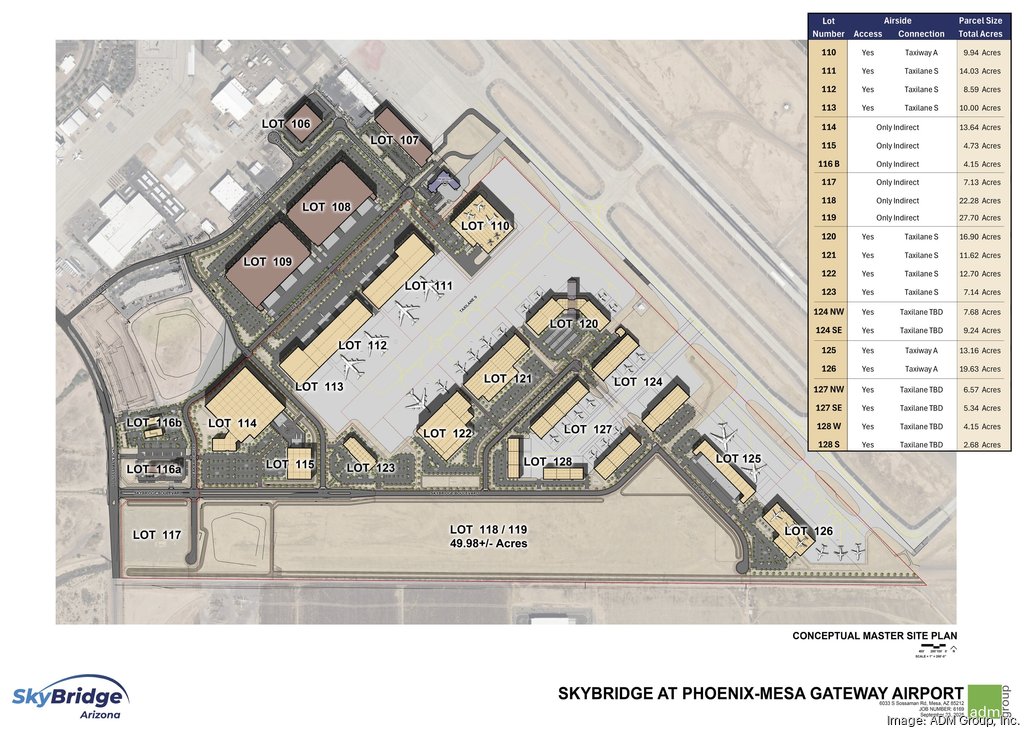
On the southwest side of the airport, SkyBridge Arizona is developing approximately 363 acres into an aeronautical and commercial business park.
The $1 billion project is expected to eventually include about 4 million square feet of development, with a strong emphasis on aviation-related uses. Its first phase has already delivered several buildings leased to aviation companies, while additional hotel, office and commercial projects are moving forward.
Future aviation infrastructure, including the planned Taxilane Sierra project, is expected to open additional acreage for businesses involved in air cargo, aircraft maintenance, manufacturing and other aviation services.
Aviation Growth Creates More Jobs
Mesa Gateway Airport’s economic impact extends beyond passenger traffic. More than 50 companies have facilities on airport property, including major aviation and aerospace businesses such as Gulfstream, Garmin, Embraer and Virgin Galactic.
Airport officials estimate that approximately 3,000 people work at the airport and its on-site businesses. The area also benefits from nearby educational institutions, including Chandler-Gilbert Community College and Arizona State University’s Polytechnic campus, which help provide a workforce for aviation and advanced manufacturing employers.

Lori Collins, the airport’s director of business and economic development, has played a key role in attracting new investment since taking the position in 2023. She previously worked in economic development for the City of Mesa, as well as Phoenix and Chandler.
More Development Ahead
Growth at Mesa Gateway isn’t slowing down. FlightSafety International is building a 100,000-square-foot aviation training facility at the airport, with an expected opening in early 2028.
The airport is also planning for future passenger growth and infrastructure needs through its long-range master planning efforts.
With record passenger numbers, expanding aviation businesses and major commercial projects underway, Mesa Gateway Airport is becoming an increasingly important economic engine for Southeast Mesa and the broader East Valley.